




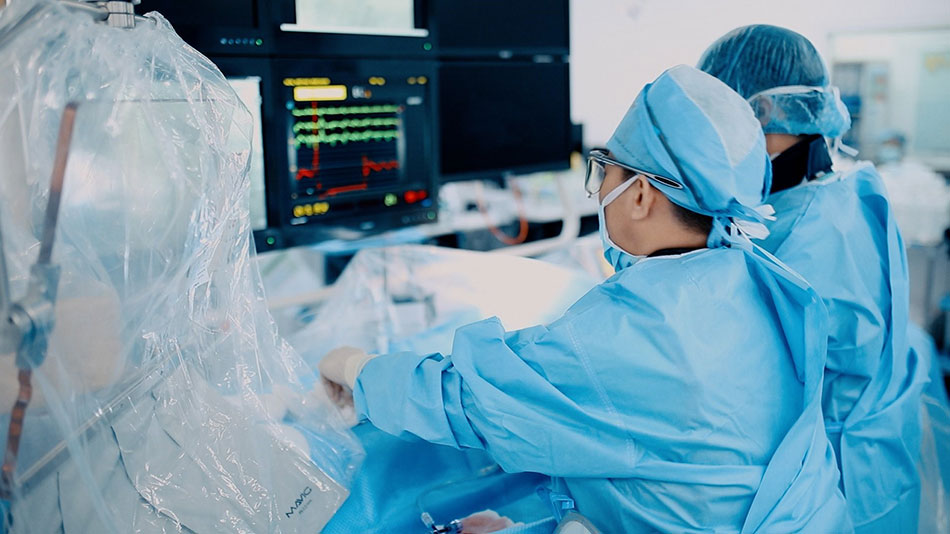
TAVI in Mumbai: What Should Patients Check Before Choosing a Heart Valve Centre?

Being told that an aortic valve is severely narrowed can be worrying, particularly when a procedure such as TAVI is being discussed. TAVI, or transcatheter aortic valve implantation, replaces a diseased aortic valve through a catheter rather than conventional open-chest surgery. Current European valve guidelines place strong emphasis on treatment decisions being made by a multidisciplinary Heart Team and on managing complex patients within experienced Heart Valve Centres.
For patients looking at TAVI in Mumbai, the practical question is therefore not simply, “Which hospital offers TAVI?”
A better question is, “Does the centre have the people, imaging, planning process, emergency support, and long-term follow-up needed for my particular case?”
Start with an accurate diagnosis
TAVI is principally used in aortic stenosis, where the aortic valve becomes narrowed and cannot open normally.
Typical symptoms of severe aortic stenosis can include:
- Breathlessness during activity
- Chest discomfort
- Fainting or near-fainting
- Reduced exercise capacity
- Increasing fatigue
- Heart-failure symptoms
These symptoms are not enough to decide treatment by themselves.
Echocardiography is normally used to establish the severity of valve narrowing and assess heart function. Sometimes symptoms and the initial echocardiogram do not match clearly, so additional tests may be needed.
A centre should first confirm the diagnosis rather than beginning with an assumption that TAVI is automatically required.
Look for a multidisciplinary Heart Team
TAVI is not simply a catheter procedure performed by one doctor.
Treatment planning may involve:
- An interventional cardiologist
- A cardiac surgeon
- A cardiac-imaging specialist
- An anaesthesiologist
- Specialist nurses
- Other physicians where kidney, lung, neurological, or vascular disease is present
Current ESC/EACTS recommendations specifically emphasise Heart Team assessment when determining whether TAVI, surgical aortic valve replacement, or another strategy is most appropriate.
This is important because TAVI may be an excellent option for one patient but not the best choice for another patient of the same age.
Ask how the centre plans the procedure
Good TAVI planning involves considerably more than checking whether the valve is narrow.
CT imaging is commonly used to assess:
- The size and shape of the aortic annulus
- The aortic root
- The relationship of the coronary arteries to the valve
- Calcium distribution
- The femoral and iliac arteries
- Whether the usual groin access route is suitable
Research on pre-procedure imaging describes CT as a central tool for prosthesis sizing and assessment of vascular access and coronary anatomy.
The clinical team may also evaluate kidney function because CT commonly requires contrast.
Ask about alternative access
Most TAVI procedures are performed through the femoral artery in the groin.
However, some patients have arteries that are too narrow, calcified, tortuous, or otherwise unsuitable for standard transfemoral access.
A valve team should be able to explain whether the patient’s blood vessels are suitable and what alternatives would be considered if the standard approach is not possible.
The existence of an alternative route does not mean it is automatically suitable. Each approach carries its own risk profile.
Ask what happens when the unexpected occurs
Even though TAVI avoids a conventional sternotomy, it remains a major cardiac intervention.
Potential complications can include:
- Bleeding
- Vascular injury
- Stroke
- Kidney injury
- Abnormal heart rhythm
- Need for a pacemaker
- Leakage around the new valve
- Coronary obstruction
- Infection
- Emergency surgery in rare situations
Patients should understand what facilities and personnel are available if a serious complication occurs.
Consider experience, but question vague marketing claims
Procedure volume and team experience may be relevant, but patients should be cautious about broad claims such as “100% success,” “completely safe,” or “zero-risk TAVI.”
No responsible cardiac centre can guarantee an outcome.
Ask instead about:
- The team’s experience with your type of anatomy
- How complications are monitored
- Whether outcomes are formally audited
- What happens if transfemoral access is unsuitable
- How emergencies are managed
- Who provides follow-up
What about TAVI at Heart Valve Experts?
Heart Valve Experts has a dedicated page describing its structural heart assessment and TAVI evaluation in Mumbai. The site states that patients are evaluated through a structural heart team and provides specific information about TAVI for aortic stenosis.
That information should be treated as a starting point for a clinical consultation, not as proof that every patient with aortic stenosis should undergo TAVI.
Ask about the complete pathway
The centre should explain what happens:
- Before admission
- During the procedure
- During hospital recovery
- After discharge
- At follow-up echocardiograms
- If symptoms return later
- If the valve eventually deteriorates
Patients travelling within Mumbai or from another city should also ask who will handle routine care once they return home.
Questions worth asking
Before choosing a centre, ask:
- Is my aortic stenosis definitely severe?
- Do I need intervention now?
- Am I a candidate for both TAVI and surgery?
- What does my CT scan show?
- Which valve type is being considered?
- Is transfemoral access possible?
- What are my individual risks?
- Could I need a pacemaker?
- What follow-up will be required?
- What happens if I develop a complication?
- How does my age affect lifetime valve planning?
The goal should not be to find a centre willing to perform TAVI. It should be to find a team willing to determine whether TAVI is genuinely the right treatment.