




How Doctors Check for Heart Blockage

There is no reliable home test that can confirm or rule out coronary artery blockage. Diagnosis begins with symptoms, medical history, examination and cardiovascular risk. A review of out-of-hospital and emergency evaluation for acute coronary syndrome explains that initial assessment includes symptoms, risk factors and an ECG. Further testing depends on whether the situation is urgent and how likely coronary disease appears to be.
Doctors first ask about the discomfort. Pressure, heaviness or squeezing during effort may raise concern, especially when it spreads to the arm or jaw.
They also ask about breathlessness, sweating, nausea, fainting and reduced exercise tolerance.
Risk factors include diabetes, high blood pressure, high cholesterol, tobacco use, kidney disease and family history.
The examination may include blood pressure, pulse, oxygen level and listening to the heart and lungs.
An ECG records the heart’s electrical activity. It can show certain rhythm problems and changes linked to reduced blood flow or heart injury.
A normal ECG does not prove that every coronary artery is clear.
Troponin blood tests may be used when a heart attack is suspected. The level may need to be checked more than once.
An echocardiogram shows heart structure, valve movement and pumping function. It does not directly show all coronary narrowing.
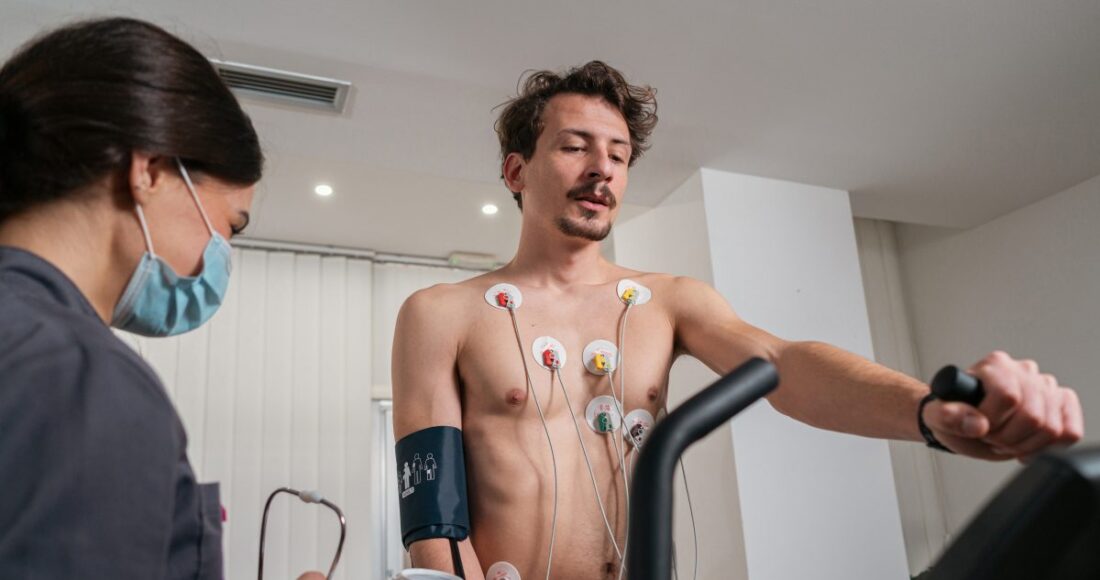
An exercise stress test examines how the heart responds to physical effort. It is not appropriate for every patient.
Stress imaging may combine exercise or medicine with an ultrasound or another type of scan.
CT coronary angiography provides detailed images of the coronary arteries in selected people. It may show plaque and narrowing.
Invasive coronary angiography uses a thin tube and contrast dye to examine the arteries directly. It may be used when the chance of significant disease is high or when treatment may be performed.
Smartwatches, oxygen monitors and pulse checks cannot exclude coronary blockage.
The best test depends on symptoms, age, risk, kidney function, previous tests and whether the person is stable.
Madhavbaug provides an educational guide on ECG testing and heart blockage. Readers can learn about its broader heart-care services through the Madhavbaug homepage.
Call emergency services for severe or persistent chest pressure, fainting, sweating, marked breathlessness or pain spreading to the arm, jaw, shoulder or back.
Testing should be selected by a qualified clinician. No single online checklist can determine whether coronary arteries are blocked.